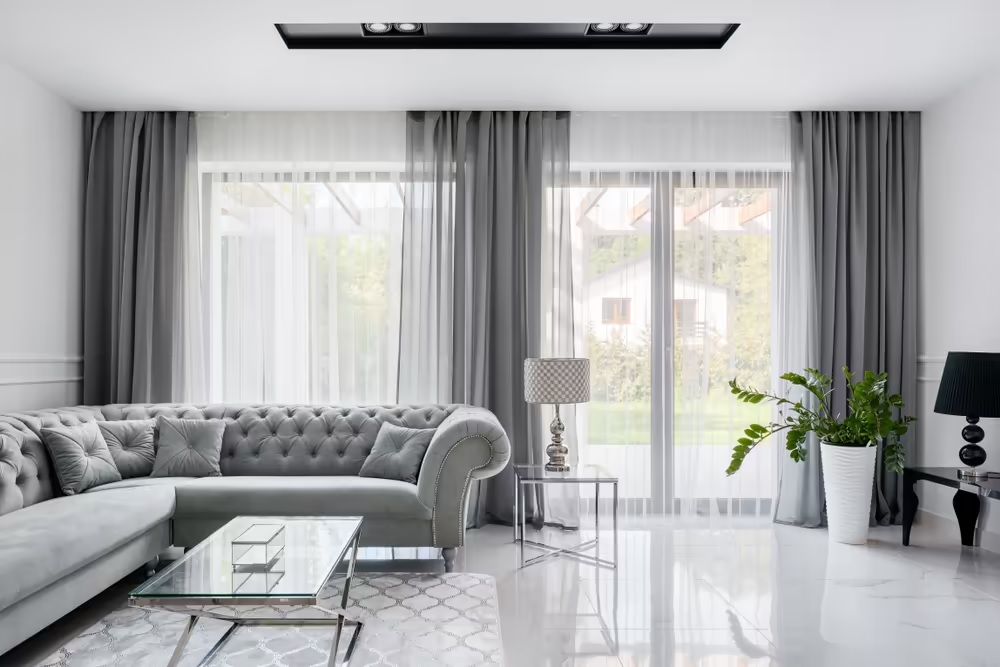
Curtains are often one of the largest fabric elements in a room, which means the material you choose can quietly determine the entire mood of the space. The same window can feel relaxed and coastal in linen, polished and traditional in a refined cotton, dramatic in velvet, or distinctly contemporary in a structured woven fabric.
That is why choosing fabric for your custom curtains should go beyond picking a color you happen to like.
The right fabric should speak to the architecture, furniture, lighting, and personality of the room. It should also perform well in the space, whether that means filtering harsh sunlight, providing privacy, creating insulation, or simply adding softness to a room filled with hard surfaces.
Whether your home leans minimalist, traditional, modern, transitional, or somewhere in between, the fabric at your windows can reinforce the style beautifully.
Here is how to choose it.
Start With Your Interior Style
Before getting distracted by hundreds of beautiful fabric samples, identify the overall language of your room.
Is it relaxed and organic? Formal and traditional? Clean-lined and contemporary? Colorful and eclectic? Warm and transitional?
Your answer will immediately narrow the field.
For example, a relaxed interior generally benefits from fabrics with natural texture and an effortless drape. A traditional room can support more substantial materials, classic patterns, and decorative details. Contemporary minimalist interiors often look best with fabrics that have a clean silhouette and restrained texture.
This does not mean you need to match a fabric to a specific design category. Some of the most interesting interiors deliberately combine styles.
The aim is to understand what the room is already saying and choose a fabric that adds to the conversation.
For a Relaxed Interior, Consider Linen
Few fabrics capture an easy, sophisticated atmosphere quite like linen.
Its natural texture and slightly irregular weave give curtains an informal quality without making them look casual or unfinished. Linen works beautifully in coastal, organic, Scandinavian-inspired, transitional, and relaxed contemporary interiors.
It is also particularly effective when the room already contains natural materials such as wood, rattan, stone, jute, or woven upholstery.
Neutral linen curtains in ivory, oatmeal, flax, beige, or soft gray can create an elegant backdrop without competing with the rest of the room. If the space needs more personality, linen blends and printed linens can introduce patterns while retaining the material’s relaxed character.
The beauty of linen is that it does not need to be perfectly pristine to look good. Its natural variation is part of its appeal.
For a Traditional Interior, Embrace Richer Fabrics
Traditional rooms tend to have more visual layering, which means the windows can support fabrics with greater depth.
Velvet, silk-inspired textiles, damasks, classic prints, and substantial cottons can all work beautifully in traditional interiors. The right choice depends on how formal you want the room to feel.
A velvet curtain in a rich jewel tone can create a dramatic focal point in a formal living room, while a muted floral or stripe can feel much more understated.
Traditional does not necessarily mean ornate.
A simple linen or cotton curtain in a classic pattern can look wonderfully timeless, particularly when paired with tailored furniture and architectural details.
The goal is to choose a fabric that complements the room’s sense of history and craftsmanship without making the space feel stuck in a particular era.
For Contemporary Spaces, Keep the Fabric Clean and Architectural
Modern interiors often benefit from restraint.
That does not mean the curtains need to be plain or boring. It simply means that the fabric should support the clean geometry of the room rather than compete with it.
Solid linen, textured woven fabrics, cotton blends, and other materials with subtle surface variation can work beautifully. Look for fabrics that create depth through texture rather than excessive ornamentation.
Color can be equally restrained. Soft white, stone, warm gray, taupe, charcoal, and muted earth tones can all create a sophisticated backdrop.
If you want a pattern, consider a subtle stripe or geometric motif with relatively low contrast.
In a contemporary room, the silhouette of your custom curtains is often just as important as the fabric itself. Generous, clean folds and precise floor-length panels can make a simple material feel exceptionally polished.
For Transitional Interiors, Mix Old and New
Transitional interiors sit comfortably between traditional and contemporary design, which makes them wonderfully flexible when it comes to curtain fabric.
You can combine the relaxed texture of linen with classic patterns, or use a traditional stripe in a modern neutral palette. A subtle floral can feel fresh when paired with streamlined furniture, while a solid velvet can add richness without making the room overly formal.
The key is balance.
If the furniture already has traditional detailing, consider a simpler fabric. If the room is predominantly contemporary, a classic textile can introduce warmth and character.
This is one of the styles where custom curtains can be particularly effective because the fabric, fullness, length, and finishing details can all be calibrated to achieve precisely the right balance.
For Minimalist Interiors, Let Texture Do the Work
Minimalist rooms benefit from fabrics that create visual interest without adding clutter.
This is where texture becomes particularly valuable.
A simple linen curtain can introduce movement through its weave and folds. A softly textured cotton or woven fabric can create depth while keeping the color palette extremely restrained.
Instead of choosing a busy print to make the windows interesting, look for subtle variations in the surface of the fabric.
Warm white linen against a pale wall, for example, can create a sophisticated tonal effect. The colors may appear almost identical, but the difference in texture prevents the room from feeling flat.
Minimalism is not about eliminating visual interest. It is about editing it.
For Eclectic Interiors, Don’t Be Afraid of Pattern
If your home already embraces color, pattern, and collected pieces, the curtains do not necessarily need to blend into the background.
In fact, they can become one of the most expressive elements in the room.
Florals, checks, stripes, geometrics, and painterly motifs can all work beautifully in eclectic interiors. The trick is to identify a color relationship between the curtain fabric and the rest of the room.
The fabric does not need to match the sofa or rug exactly. Instead, look for one or two shared tones that create a subtle connection.
Patterned curtains can be particularly effective here because they bring together multiple colors in a single element. A well-chosen print can act as a bridge between otherwise unrelated pieces of furniture and artwork.
Think About Color Temperature
Even when you have chosen a general color family, undertones matter.
A gray curtain can be warm, cool, blue-based, green-based, or almost beige. A white curtain can lean toward ivory, cream, or a much cooler crisp white.
These subtle differences become particularly noticeable across large expanses of fabric.
If your room contains warm wood, brass, cream upholstery, and earthy colors, a warm neutral will usually feel more harmonious. A room filled with white, black, chrome, glass, and cooler grays may benefit from a cooler fabric.
When choosing between similar colors, compare the samples in the actual room and in different lighting conditions.
A fabric that looks perfect under showroom lighting may look completely different in afternoon sunlight.
Consider the Scale of the Room
The size of the room should influence your fabric selection.
Large rooms with tall ceilings can generally support more substantial materials and larger-scale patterns. Smaller rooms may benefit from lighter fabrics that preserve a sense of openness.
But this is not an absolute rule.
A small room can look fantastic with dramatic curtains if the rest of the design is restrained. Likewise, a large room can feel surprisingly elegant with simple linen panels.
Think about visual weight rather than simply physical size.
A dark velvet curtain carries more visual weight than a pale linen curtain, even if both cover exactly the same window.
Match the Fabric to the Furniture
Your curtains should relate to the furniture without becoming a matching set.
If the sofa is heavily textured, a smoother curtain can provide contrast. If the furniture is sleek and minimal, a tactile curtain can introduce softness.
Pattern can work the same way.
A room with a patterned sofa might benefit from solid curtains, while a room with mostly plain upholstery can handle a more expressive print.
This creates hierarchy.
Not every element needs to be a focal point. Decide which pieces should attract attention and allow the others to support them.
The window treatment should occupy the right place in that hierarchy.
Don’t Ignore the Architecture
Curtain fabric should also respond to the architecture of the room.
Large windows and high ceilings can handle generous drapery. Small windows may look better with a lighter treatment. Ornate molding may call for a simpler fabric so that the architectural details remain visible.
If the window itself is unusually shaped or positioned, customization becomes even more valuable.
The fabric should work with the proportions rather than making an awkward window feel even more conspicuous.
This is particularly important with custom drapes, where the finished length, fullness, and width can be designed specifically around the architecture.
Consider How Much Light You Want
A fabric’s appearance is only one part of the decision.
Think about how much sunlight enters the room and what you want the curtains to accomplish.
A light, loosely woven fabric can maintain a bright, airy atmosphere while softening direct sunlight. A denser material can create greater privacy and light control.
Bedrooms may require more substantial coverage, particularly if you want to reduce early morning light. Living rooms may benefit from fabrics that allow some daylight to remain visible.
You may also want to consider lining.
A lining can change the way the fabric hangs and can provide additional privacy, light control, or insulation without changing the decorative appearance of the curtain.
Choose Fabric Based on How the Room Is Used
A formal sitting room and a busy family room do not necessarily need the same type of curtain.
Consider how much activity happens around the windows. Are children frequently playing nearby? Is the window next to a dining table? Does the room receive intense afternoon sunlight?
These practical details should influence the material.
A fabric can be beautiful and still be unsuitable for the way you live.
The best interiors balance aesthetics with everyday reality. A window treatment that looks wonderful on installation day but becomes impractical six months later is not a successful design choice.
Don’t Forget the Drape
The way a fabric falls is one of the most important characteristics to consider.
Some fabrics create fluid, relaxed folds. Others hold their shape and produce a more structured appearance.
Think about the atmosphere you want.
If you are after a relaxed, organic room, a softly draping linen may be ideal. If you want something more formal, a fabric with greater body may provide the presence you need.
The amount of fullness also influences the finished result. Generous fullness can make curtains feel luxurious, while a simpler treatment can feel more contemporary.
There is no universal formula. The fabric and construction should be considered together.
When in Doubt, Choose the Fabric That Connects the Room
The most successful curtain fabrics rarely exist in isolation.
They connect something.
Perhaps the color echoes the rug. The texture relates to the upholstery. The pattern picks up a tone from the artwork. The weight balances a substantial piece of furniture.
These connections are what make a room feel designed rather than assembled.
Your curtains do not need to match everything. They simply need to belong.
The Right Curtain Fabric Is About More Than Style
Choosing curtain fabric is ultimately a balancing act between aesthetics, architecture, lifestyle, and performance.
Linen can bring relaxed texture. Velvet can introduce richness. Cotton can provide versatility. Sheers can preserve natural light. Pattern can add personality, while a quiet solid can give a busy room the breathing space it needs.
There is no fabric that automatically makes an interior look sophisticated.
Sophistication comes from choosing the material that makes sense for that particular room.
Look at the architecture. Study the light. Consider the furniture. Think about texture, scale, color, privacy, and how the fabric will actually hang.
Then choose the material that brings all those elements together.
Because the best curtains are not simply beautiful fabrics at the window. They are fabrics that make the entire room look more considered.
