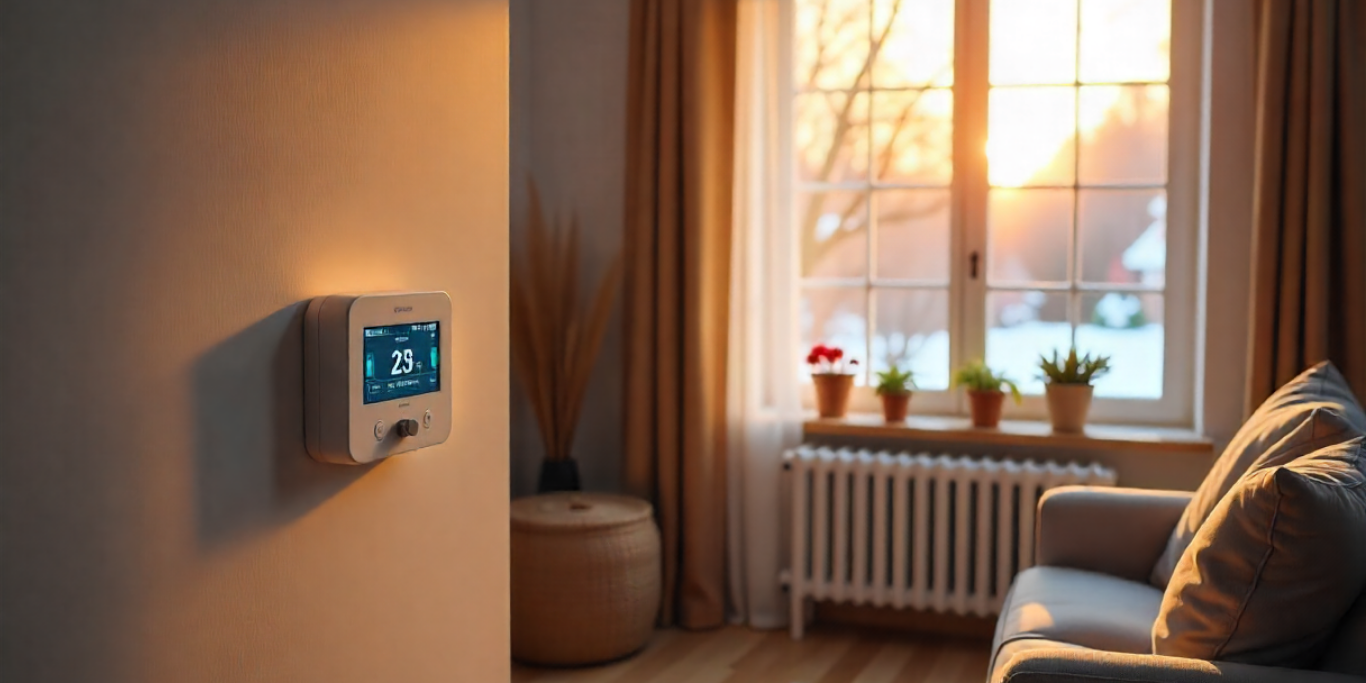
For many homeowners, high heating bills are assumed to be a problem with the thermostat. They turn it down a degree or two, put on a sweater, and consider the problem solved. In reality, the problem is usually structural – their home is losing heat at a rate much faster than their furnace can replace it. Recognizing that difference is what distinguishes a homeowner who responds to bills from one who is truly in charge of them.
The stack effect is working against you
Warm air is lighter than cool air, so it naturally rises. In a room or building, this warm air moves upward and escapes through any openings it finds—like gaps in the attic, around light fixtures, or other holes in the ceiling.
As warm air leaks out the top, colder air gets pulled in from below, typically from the basement or crawlspace. This cold air then needs to be heated, creating a continuous cycle. The constant loss of warm air and the energy needed to reheat incoming cold air drive up your heating bills and make your heating system less efficient.
Where traditional insulation falls short
Although fiberglass batts remain the most prevalent insulation product in residential homes, they have inherent limitations that we can’t ignore. Fiberglass batts are air-permeable. In other words, air flows pass through them with relative ease. Fiberglass batts also sag and shift over time, creating gaps in the wall cavities. These gaps lead to the creation of convective loops – air circulating inside the wall cavity actually pulling heat away from the interior surface. Thermal bridging exacerbates this situation as studs conduct heat at a far greater rate than the insulation between them does. This results in “cold spots” that are plainly visible on an infrared camera during an energy audit.
For homeowners really looking to reduce long-term home heating costs, transitioning to a continuous air barrier can reduce a measurable amount of heat loss. Companies like Optima Spray Foam install spray foam insulation that expands to fill cavities completely, providing R-value, in addition to a permanent air seal – all in one application. The EPA reports that air sealing in combination with insulation upgrades in attics and crawlspaces can reduce heating and cooling costs by an average of 15 percent.
Don’t overlook the ductwork
Small gaps at joints may cause the conditioned air to escape before reaching the living space, especially when the ductwork goes through unconditioned areas. The unconditioned areas could be an uninsulated attic, a crawlspace, or outdoors. Duct leakage can total more than 20% of a heating system’s total energy loss.
The fact that a heating system seems to be running “just fine” doesn’t mean all the heat it’s producing is reaching the centralized vents in your home. When it comes to maintenance, sealing duct joints with mastic or metal-backed tape and wrapping ducts that pass through unconditioned areas isn’t a particularly sexy upgrade, but it is one of the better returns available to homeowners.
Homeowners should have a professional clean filters, check heat exchanger efficiency, and measure airflow over the heating season. This further compounds the savings.
Smarter controls and zonal strategies
Once you’ve got the building envelope at least in reasonable shape, thermostat strategy starts to matter more. A programmable or smart thermostat automates temperature setbacks during sleeping hours and when the house is empty; the consistent scheduling, rather than manual adjustment that are forgotten, can lop about 8% off heating bills.
Zonal heating might be a good call if certain rooms in the house see a lot more use than others. Instead of just keeping the whole house at that higher temp, you install a little bit of extra, supplemental heating in those high-occupancy rooms, lower the central furnace a couple of degrees, and shift some costs to where it’s actually needed. This, however, works best when you’re already sealed up reasonably well – you don’t want to be heating a whole bunch of extra space that’s actively losing air.
Draft-proofing around the windows and doors with a bit of weatherstripping and caulk covers the smaller but cumulatively-not-insignificant air infiltration that adds up over the course of a full winter; this is all low-cost work that pays back really fast.
Treating the house as a system
The strategy that works best for decreasing your heating expenses isn’t one thing or one product; it’s considering your house as a whole system, one in which the insulation, air sealing, ductwork, and controls all impact on one another. Fixing one element while ignoring the others will result in you missing out on significant savings.
An energy audit performed by a pro can determine where your greatest losses are and prioritize the most cost-effective steps to take. It’s a better way to start than guessing. Homes that have been properly weatherized don’t just cost less to heat; they raise the level of comfort by keeping the temperature more constant, running the furnace less frequently, and delivering more comfort all day long.
